
Opening: The Two Prayers
I want to begin with an uncomfortable observation. Every Friday, in tens of thousands of masājid across the world, the khatīb raises his hands and prays for the people of Gaza, for the liberation of Masjid al-Aqsa, for the Ummah in its weakness. Hundreds of millions of sincere hands rise. And then we go home.
For two years we have watched a genocide live-streamed. A genocide no one can claim they did not see. And the dominant emotion in our communities is not, I think, ignorance. It is anguished helplessness. We feel everything and we move nothing.
So my question is not “do we care?” We obviously care. My question is harder. Why does so much feeling produce so little force? Why are nearly two billion Muslims, sitting on a quarter of the earth’s landmass and much of its energy, unable to protect one besieged strip of land twenty-five miles long?
And I want, at the very outset, to warn against the easy answer. The one we are handed by others and have learned to repeat about ourselves: that something is wrong with us. That we are backward, or broken, or not yet ready. That answer is a trap, and I intend to dismantle it.
We feel everything and we move nothing. That gap— between our emotion and our force— is the subject of this discussion.
I am not here to add to our grief. We have enough. I am here to argue two things at once.
First, that the grief is being wasted and that the very size of that wasted feeling is the proof of how much power we are sitting on. Helplessness on this scale is not weakness. It is strength that has not yet been organised.
Second, that the Eurocentric order can neither absorb us nor erase us and it is that failure of the Eurocentrism, not ours, that drives everything they do to us.
Hold that second sentence. It tells us that our problem is not that we are small. It is that we are large enough to unsettle a world order that has no settled place for us as we are.
If hundreds of millions can be moved to raise their hands on the same morning for the same wound, then the raw material of the greatest civil force on earth is already in the room. We are not short of energy. We are short of conversion, from our grief/feeling into force. And conversion is something we can learn.
The Landscape— Naming the Challenge Honestly
Let me lay out the terrain plainly, because we cannot fix what we are too polite to name. The Ummah today faces not one crisis but many. I want to touch on five. They look like five separate misfortunes. They are not. They are five faces of a single structure: a Eurocentric world order that presents itself as universal, neutral, the natural way of things, but which is in truth a particular European arrangement that cannot abide a Muslim political identity standing on its own terms.
This is what scholars call coloniality. This not the old colonialism of flags and garrisons, which has formally ended, but the deeper hierarchy of who is allowed to be a subject of history and who is permitted only to be its object. These are not five problems and you can add many other factors to these. They are one structure, reacting to us.
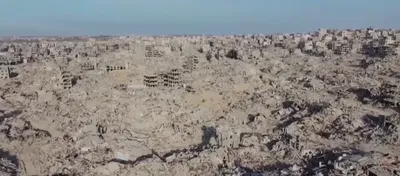
First, Gaza — and what it revealed. Tens of thousands of Palestinians killed, the majority women and children; an entire territory reduced to rubble; and famine engineered as a weapon. The war expanded to reach toward Masjid al-Aqsa itself.
And here is the lesson that should sit in this South African room with particular weight: when the institutions of the Muslim world fell silent, it was South Africa, not the OIC [Organisation of Islamic Conference]; not the Arab League; not the fifty-seven Muslim states, that walked into the International Court of Justice and said the word genocide.
The conscience of the Ummah was defended at the world's highest court by a country where Muslims are two percent of the population. Let that chastise and inspire us in equal measure.
That a single middle-power state did what fifty-seven could not is the most hopeful fact of this decade, because it proves the obstacle was never capacity. It was will. And will is the one resource no enemy can confiscate. What South Africa did, others can copy.
Second, the algorithm. While we grieve, the ground beneath us is being re-engineered. Artificial intelligence is not a neutral tool arriving to help us. In Gaza, AI target-generation systems were reportedly used to mark human beings for death at industrial speed. In Xinjiang, facial recognition and predictive policing track the Uyghur faithful by their beards and their prayer. In India, the same technologies map and profile Muslim neighbourhoods. And the large language models the whole world now consults were shown, in peer-reviewed study, to complete the sentence "two Muslims walked into a…" with violence two times out of three, a rate the AI system apply to no other group.
For the first time, Islamophobia is being written into the source code of the century — and almost none of that code is being written by us.
But code is not scripture. It is written by people, and it can be written by us. The same youthful, hyper-connected Ummah that the algorithm profiles is also the largest pool of digital talent on the planet. The frontier of ribat in this century is the data-set, the model, the platform. And understand what the model actually encodes: when it completes "two Muslims walked into a…" with violence, it is not malfunctioning. It is working perfectly and faithfully reproducing a particular Western way of seeing that has been trained to pass itself off as the view from nowhere, as simple objectivity. That is coloniality made executable.
So our task is not merely to ask for fairer treatment from someone else's machine. It is to author. We were authors of knowledge once, when Europe borrowed its numerals, its optics, its medicine from us. Nothing forbids us being authors again. That frontier is wide open, and it rewards exactly what we have in abundance: young minds.
Third, the resurgent right. Across Europe, the United States, India, and even here in Africa, a politics that treats the Muslim as the enemy-within has moved from the fringe to the centre. In Germany a party watched by its own intelligence services as extremist doubled its vote to become the official opposition. In Britain, recorded anti-Muslim hate reached its highest level on record. Hijab bans, masjid restrictions, surveillance programmes that put an entire faith under suspicion, travel bans and immigration crackdowns explicitly aimed at us. This is not a collection of accidents. It is an organised identity politics that needs the Muslim as its useful villain.
The Eurocentric order does not merely happen to dislike Islam. It requires us. A civilisation uncertain of what it now believes steadies itself by pointing at what it is against. We have been cast as the constitutive outsider, the figure the West needs in order to feel like a coherent "we" at all. That is why no amount of moderation ever earns acceptance: the role was never about our conduct. It was about their need.
Yet every demagogue who builds his career on our name has just told us something: that we are not marginal to history. They in fact announce we are central enough to be feared. They organise against us because our presence is permanent and growing. Fear is a backhanded confession of our significance. And the answer to organised contempt is not to shrink; it is to out-organise it. This is what South Africa's own history proves, the morally serious oppressed can do to the powerful.
Fourth, beneath all of these — our own paralysis. Fifty-seven states. Summits that issue statements. Normalisation deals signed over the heads of the very people being bombed. Lebanon, Syria, Iran, Yemen, Tunisia, and Doha are struck and it produces no sanction, no embargo, no suspension of ties, no deterrent of any kind.
Now, the easy analysis stops here and calls us docile. I will not give you that version, because it is the colonised mind blaming itself for its own chains. Ask instead: why can fifty-seven states feel one wound and still not act as one body? Because they were never built to. The nation-state map of the Muslim world is itself the colonial settlement. These are borders drawn in European chancelleries precisely to break a single Ummah into fifty-seven manageable pieces, each small enough to be patronised, played off, or bought. The summit fails not because Muslims are weak by nature, but because the very container we are asked to act through was engineered to make ummatic action impossible.
We are not a docile people. We are a dismembered one— cut into fifty-seven pieces by a map we did not draw. And what was cut by design can be sewn back by design.
Notice the good news hiding in the hardest sentence. If our paralysis is built into a container designed by others, then the cure is not to beg that container to work. It is to begin acting as one body anyway. We need to rise beneath the states, across the borders, through the networks of conscience that no chancellery can redraw. We do not need fifty-seven governments to agree. We can begin to act as a single political subject ourselves, tonight, without anyone's permission. The reflex of acting together is the one part of this whole landscape that is already fully inside our own hands.
And fifth — our disunity. Let me be careful about this word. I am not calling for uniformity. Two billion Muslims of dozens of ethnicities in as many countries will not, and need not, be uniform. Nor is unity merely the respect or celebration of differences.
So what is unity? Unity is when we come to share the same language — and by language I mean a shared common sense of concern. When we hear about Gaza, about al-Aqsa, or a suffering of a Muslim no one should have to knock on our door and ask us to act. We should act on our own impulse, as a natural reaction.
Consider two images. If you burn your hand, your other hand does not wait to be asked before it moves toward the wound. It moves before thought. That is unity. The Prophet r described the Ummah as one body, not one neighbourhood, not one tribe: one body. A body that must be told its own hand is burning has already lost something deeper than politics. Or consider a mother whose child is in danger on the other side of the world. She does not wait for a news bulletin to confirm her concern. She already knows, what needs to be done. That doing before-being-told is what Ummatic unity actually means — not that we agree on everything, but that when certain pain reaches us we turn to action without needing to be marshalled.
But here is the thing about common sense: it can be trained. The Friday we began with already proves the nerve is alive. It shows the whole body still feels the one wound. We do not have to manufacture the feeling; it is already there. We only have to school it into reflex, household by household, masjid by masjid. Unity of feeling we already possess. Unity of response is the habit we now build.
The Diagnosis: A Religion of Revolution Turned into a Sedative
If the landscape names what is being done to us, the diagnosis must name what has happened within us. There are two factors, and they are joined at the root.
The first is that, under colonialism and the coloniality that outlived it, Islam became privatised. This was not an accident. It was a design. The modern order can tolerate Islam as a religion. That is Islam as a private faith, a heritage, a cuisine, a way of dying. What it cannot tolerate is Islam as a political subject, as a name around which two billion people might assemble and make demands of the world. So a bargain was offered, and over a century we quietly accepted it. To be able to exists/leave within the Eurocentric order we accepted to keep Islam in the heart, in the home, in the masjid, and out of history. Believe what you like on Friday, provided it changes nothing on Monday.
The second is that Islam, a faith born as a revolution, a faith that was willing to suffer migration, oppression and taunts. A faith through sacrifice that established a political order and began by smashing idols and overturning the hierarchies of Mecca, has been slowly converted into its opposite. Into a sedative. A painkiller. Something we take to make the suffering bearable rather than to end it.
The impact of this dual action is precisely the helplessness we opened with.
We have traded an Islam that fights for justice — measuring success against the standard of the hereafter — for a "sedative Islam": the Islam of endless ritual without consequence, of waiting passively for divine intervention while the world burns.
We took the most explosive concepts in our tradition and defused them. We turned shahada into a private ticket to Jannah. We turned taqdir and sabr, into an excuse to do nothing now. We perform the rituals flawlessly and we have forgotten what they were for.
Ask yourself honestly, when our communities feel the pain of Gaza, what do we reach for? Very often, another gathering, another night of supplication, another emotional lecture. And then sleep. The ritual absorbs the energy that should have become action. The painkiller works. That is exactly the problem. A sedative is judged successful when the patient stops moving. And a Muslim who has been sedated keeps the coloniser comfortable.
Duʿaʼ was never meant to be the end of our response to injustice. It was meant to be the beginning of it.
Duʿaʼ is a shield, yes, but remember that the power of a weapon lies not in its possession but in its use. A weapon fulfils its purpose only when it is wielded.
And that reframing is itself the beginning of the cure, because it costs nothing and is available every Friday. The same ritual that has been sedating us is, with one turn of intention, the most powerful mobilising engine any community on earth possesses. No other movement can gather its people weekly, by the hundred million, already primed to act for the sake of Allah. The minbar that put us to sleep is the same pulpit that can wake us. We do not need a new tool. We need to remember what the one in our hands is for.
De-privatising the faith — the work nobody else can do for us. Here I want to slow down, because this is the hinge of everything that follows, and it is the point I have been pressed to make plainer. It is not enough to diagnose the privatisation of Islam. We have to say, concretely, how a community overcomes it. How faith is brought back out of the private heart and into the shared world where power is actually contested. If privatisation was done to us by design, then de-privatisation must be done by us, also by design. It will not happen by sentiment.
Let me be exact about what privatisation is and is not, so that overcoming it is not mistaken for something cruder. De-privatising Islam does not mean policing private belief, nor seizing the apparatus of a state, nor imposing piety by force. It means refusing the false partition that says faith may govern the prayer mat but not the marketplace, the home but not the public square, the funeral but not the future. It means allowing Islam to do in public what it already does in private: to order our priorities, to name what is just and what is unjust, to summon us to act. Privatisation amputated the public limbs of the faith. De-privatisation is physiotherapy, teaching those limbs to move again.
How, then, does it actually happen? I would name several disciplines, and I want you to notice that each of them is something this room can begin without anyone's permission.
It begins with naming the bargain out loud. A trap you cannot see, you cannot leave. The first act of de-privatisation is for the khatīb, the teacher, the parent to say plainly: we were offered a deal — keep Islam in your chest and out of the world — and we are declining it. Simply making the privatisation visible breaks half its power, because it has always worked best when we mistook it for piety. The man who keeps his faith quiet in public often believes he is being humble or prudent. He must come to see that he is, without intending it, honouring a settlement designed by people who wished his faith to have no consequences.
It continues with restoring the public vocabulary of the faith. A privatised religion is one whose words have been quietly relocated, where ideas of justice, witness, struggle, sanctuary surrendered to secular custody, while we are left with a vocabulary of private comfort only. To de-privatise is to speak ʿadl, ẓulm, shahada, amr bil-maʿruf, ribat, fadhail in public, about public things, without apology and without first translating them into someone else's terms. The community that can only describe its own deepest commitments in borrowed language has already privatised itself, because it has agreed that its own words are unfit for the public square.
It requires rebuilding our own institutions. This is decisive, because privatisation is enforced by infrastructure, and only infrastructure overturns it. A faith with no schools of its own teaches its children in someone else's frame. A faith with no waqf depends for its survival on the goodwill of those who would prefer it quiet. A faith with no media speaks only when granted a microphone, and then only on the terms of the one holding it. The masjid, the madrasa, the endowment, the legal fund, the journal, the media house, these are not optional extras to belief. They are the public lungs of a faith. Privatisation collapsed those lungs. Rebuilding them is how the faith breathes in public again. The Muslim institution is, in this precise sense, an instrument of de-privatisation.
It demands a public ethic that costs us something. Privatised religion is, above all, convenient, it asks nothing that would inconvenience our standing, our comfort, our careers. The boycott that makes us ethical consumers, the 'political' vote cast on principle against our own short-term interest, the vacation where solidarity trumps luxury, the civic commitment over leisure time, the public word spoken when silence would have been safer: these small, costly, visible acts are how faith re-enters the world. Every time a Muslim accepts a real cost for the sake of a public good named in the language of the Dīn, the partition between private faith and public life cracks a little further.
And it rests, finally, on the household. The partition is rebuilt or dismantled there before anywhere else. A child who learns that prayer is for the masjid but the world runs on other rules has already been handed the privatised faith as an inheritance. A child raised to see her donation, her honesty, her courage, her refusal of a lie as part of her Islam, not as secular add-ons to a private devotion, has been inoculated against the bargain before it was ever offered to her. The family is the smallest unit of de-privatisation, and the one entirely within our hands.
None of this is the seizure of power. It is something more durable and more difficult: the patient reconstruction of a faith that expects to be consequential in the world. The privatised Muslim asks, "How can I preserve my personal piety without disturbing the world around me?" The de-privatised Muslim asks, "How must I shape the world around me in obedience to Allah?" The privatised Muslim seeks permission to believe; the de-privatised Muslim asks what must be offered to the world. The whole of the practical programme I will come to rests on that shift in orientation. The whole of the practical programme I will come to rests on having changed that one question.
Questioning the question. So the question before us seems to be the hardest one: why are we marginalised, oppressed, colonised? I say we must first question the question. Notice what it does. It turns the spotlight back on us and asks us to confess our defect. This question demands to explain what is wrong with Muslims, what we lack, where we fell behind. Every answer we give in that frame, however sincere, has already accepted the terms of the one who is interrogating us. It treats our subjection as a verdict on our worth. I want us to refuse the question as it is posed and ask a better one.
There is a brutal idea worth sitting with: that we are not subjugated because we are deficient, but because we are a threat. A people who carry within them a name Islam a faith that can summon a loyalty deeper than the nation, wider than the market, older than the empire. This is the Islam in which a father in Gaza accepts the death of his child, a mother in Xinjiang is ready to face the concentration camp, and young people in the West are willing to surrender comfort and luxury for justice. The coloniser's deepest fear was never our backwardness. It was our coherence, the possibility that this Islam might one day gather us into a subject that acts.
The crisis of the Ummah is not that we are too weak to deserve a place in the world. It is that we are too strong to be ignored, and too whole to be absorbed.
Now, I want to be careful, because refusing the question "what is wrong with us?" can become euphoric. It does not mean we have no work to do. It means we stop accepting that our suffering is a verdict on our worth. The bombs falling on Gaza are not a judgement on Palestinian character. The drain of our wealth, the redrawing of our borders, the propping-up of our dictators, these were done to us, and they were done precisely because a Muslim political subject was dangerous to the order that did them. To name that is not self-pity, and it is not self-blame. It is to see clearly.
And seeing clearly is a tool for self-respect. Because the answer to being made an object is to insist on being a subject, to insist on agency, Muslim agency. If our condition were caused entirely by others, then only others could fix it, and we would be reduced to spectators of our own fate. This idea refuses to let us be spectators. It says: there is a portion of this that is ours to repair, and that portion is the one place where our action is guaranteed to matter. We must be the agents of repair, and carve our own future.
Think about it. We share the same time, the same resources, the same Allah-given intellect as anyone else. We are not lacking in capacity. What we have surrendered is something more dangerous to lose: the right to name our own world. We have let others supply the very words in which we are allowed to think about ourselves. We use their phones, their platforms, now their AI and that alone would be no shame; every civilisation borrows tools. The deeper surrender is that we have also borrowed their categories. That is, their measures of what counts as advanced, rational, civilised, moderate and thereafter judged ourselves by them and found ourselves wanting. That is the real occupation: not of our land, but of the standards by which we assess our own worth.
We import the West's objects and call it progress, while we let it keep the deeper monopoly — the power to define what counts as progress at all. A people that cannot name its own world is governed even when it is not occupied.
But a civilisation that diagnoses itself this clearly is already reviving, because the moment we see that our subjection is a measure of our significance, not our defect, the shame lifts and the work begins. If the door was the door of privatisation, the deal that Islam stay in the heart and out of history, then we can refuse it from the inside. We are not waiting on the enemy's mercy and we are not confessing a defect. We are reclaiming a name that was always ours to carry into the world. That is not despair. That is the most empowering position in this whole discussion.
So put the two halves together. On one side, our faith was privatised. On the other, we turned our faith into a sedative. The combined effect was that the world was arranged so that a Muslim political subject could never assemble. These are not two diseases. They are one structure seen from inside and out and so, mercifully, they share a single cure: to refuse the privatisation and to turn Islam from a sedative into a stimulant, a catalyst, so that Muslims walk back into history as a subject, a people that acts.
The Marginalisation of Muslim Agency— and the Answer of al-Aqsa
Let me show you practically how this works. When we stand for Palestine, for Masjid al-Aqsa, we have gravitated to couching the whole matter in the language of international law, human rights, humanitarianism, decolonial theory. Now hear me clearly: those vocabularies are not our enemies. International law gave South Africa its doorway into The Hague and we need to use every one of them.
But they cannot be the only language we speak. These are not neutral, empty containers into which any cause may be poured. They are a particular tradition's vocabulary, and they carry that tradition's judgements smuggled inside them. They will receive our grievance only after it has been translated out of the terms in which we actually live it, stripped of Allah, stripped of the sacred, until it is safe. The moment that borrowed language becomes the only one we are permitted, our cause has already been quietly disarmed.
When Muslim activism is told it may only speak in someone else's vocabulary, our own agency is quietly marginalised — relocated from the centre of the struggle to its suspect margins.
I call this a double move: erasure and relocation. First, a century of Muslim mobilisation for Palestine, long before the Western left adopted the cause, is erased from the record. Then, when our faith-driven activism grows too large to ignore, it is relocated into a suspect category, that is branded as the "Islamisation".
Do you see the trap? We are first told our solidarity does not exist, and then told it is dangerous. We are erased, and then we are feared. This is how Muslims are taught to be embarrassed by the very faith that makes them strong.
And it is precisely Muslimness in this context Masjid al-Aqsa that has for fourteen centuries, done something no human-rights treaty can do: it has bound a Malay fisherman, a Nigerian scholar, a Bosnian soldier, and a Cape Town imam into a single body that feels one wound. It is the anchor of an Ummatic solidarity that crosses every border the modern nation-state has tried to impose on us. This is exactly what I mean when I say Islam is the name around which a political subject can assemble. Al-Aqsa is not a sentiment we add to the cause. It is the very thing that makes an Ummah. To surrender it is not to be moderate. It is to consent to our own dismemberment.
They ask us to drop the one language in which two billion people are already fluent. Why would we surrender our strongest weapon to sound more polite to people who were never going to be persuaded anyway?
So the recovery here is not complicated, it is simply to stop being ashamed. To centre al-Aqsa [and all issues with Muslimness] is not narrowness and it is not bigotry; it is the recovery of a solidarity that was global before "global" was fashionable. And it costs us nothing to speak the language of law and rights alongside it. We can carry both. The strong do not have to choose; they refuse the false choice. The moment we stop apologising for our own frame of reference, we have already begun to win back the agency they tried to take.
From Ritual to Action— Reclaiming Ribat
So how do we move from feeling to force? I want to give you one word from our own tradition that does the whole job. Not a borrowed word. Ours. The word is ribat.
Classically, ribat meant standing guard at the frontier, the murabit and the murabita, the man and the woman who held the line. The Prophet r said that a single day of ribat is better than the world and all that is upon it; and that while every other person's deeds are sealed at death, the deeds of the one in ribat keep multiplying until the Day of Resurrection.
And here is the point that should change how each of us works on Monday morning. One can be engaged in ribat from near and from far.
Those at a distance are not exempt from ribat. The one who funds the guard, who carries the narrative, who refuses the lie, who protects the heritage — they too are murabitun. Ribat reaches Gaza from Cape Town.
This is the bridge from ritual to action, and it is the call of the hour. Ribat is worship that is also work. It is ʿibada you cannot perform sitting down. It fuses the thing we are good at, devotion with the thing we keep failing at, sustained, organised, collective defence. It tells the financier, the journalist, the teacher, the coder, and the imam that each of them holds a section of the wall, and each must put faith into practice.
Notice, too, that ribat is itself an act of de-privatisation. It takes the most private thing, the niyyah in the heart and binds it to the most public thing, the defence of a frontier. The privatised Muslim believes worship ends at the prayer mat. Ribat declares that worship continues into the marketplace, the ballot box, the newsroom, the codebase and beyond. It is the precise word, ribat, our tradition gives us for refusing the bargain that said faith must stay indoors.
Feel how this single word dissolves the whole problem we opened with. The helplessness vanishes the instant a person learns that their donation, their vote, their boycott, their truth-telling online is ribat. Part of our faith that is rewarded as guarding the sacred frontier. Suddenly there is no such thing as a Muslim who can do nothing. Every single one of us is handed a post on the wall. Ribat turns two billion spectators into two billion guards.
Revival — What this Room can Actually Do
I promised you practical steps, not just diagnosis. Real change does not begin with seizing the state. It begins with an oasis of small, independent, networked bodies of committed people who start building the new reality without waiting for any government's permission. You, in this room, are exactly such an oasis.
So here is the work and notice that every item is already being done, successfully, by Muslims somewhere. None of this is theory. Notice, too, that every single item is a way of taking the faith back out of the private heart and into the public world and reclaiming the empowering nature of Islam. The programme below is de-privatisation and inspiration made concrete.
End the sedative khutbah. Whether the sermon is on Gaza, on Islamophobia, or on a social ill at home, a sermon that ends in tears and nothing else has done its job badly. It is a sedative. Every khutbah of grief must end in one specific, nameable action the congregation will take before the next Jumuʿah: a boycott target, a fund, a letter, a meeting. Turn feeling into a task while they are still standing in the rows.
Reframe ribat from the minbar. Teach our community that the boycott, the donation, the vote, the protest, the countering of a lie online, these are ribat, they are ʿibada, they carry the reward of guarding the frontier. Give the everyday act its sacred weight back.
Refuse to secularise the pulpit. Never drop al-Aqsa or a Muslim centric issue anywhere from the khutbah. The masājid where al-Aqsa is named every Friday are the ones keeping the cause alive. Be one of them, and refuse the pressure to make your own minbar safe for the oppressor and silent for the victims.
Build institutions, not just moments. A protest is an event; an institution is a force. South Africa's own Muslim anti-apartheid legacy, the tradition that produced people willing to fight injustice as a matter of faith, from Imam Abdullah Haron to the activists of the Call of Islam and Qibla, is living proof that durable structures outlast any single campaign. Build the think-tank, the media house, the legal fund, the school, the revived waqf.
Master the new tools or be mastered by them. The danger is letting the model define us while we never define it. Do not let our entire relationship with
AI [artificial intelligence] be that of the consumer and the surveilled. Fund Muslim technologists. Demand transparency on algorithmic bias. Treat data and code as the new frontier of ribat because that is exactly what they are.
Use the economic weapon, because it works. Boycotts are not gestures. Sustained, disciplined pressure has measurably hurt complicit companies, global brands have openly told their shareholders that the Middle East and "misperceptions of our brand" dented their sales. This is action available to every Muslim, every day, with no permission required.
Convert numbers into political weight. In the 2024 British election, organised Muslim voters elected independent MPs on Gaza and shook a governing party in its heartlands; across the Atlantic, an "uncommitted" movement gathered over seven hundred thousand votes. Demography is only power when it is organised. Register, bloc, negotiate, and hold representatives to account — wherever you live.
Win the narrative. Counter the erasure with our own scholarship, our own media, our own archive of a century of Muslim solidarity. But go further than rebuttal: do not only answer their story in their words, author our own categories. If we only ever defend ourselves in the vocabulary of those who accuse us, we have lost the argument before it begins. If we do not tell our story, in our own terms, the algorithm will tell it for us and we have already heard what it says.
Build the knowledge, not only the campaign. The most durable answer to coloniality has never been a slogan; it has been an institution through a journal, a network, a school of thought that studies Muslims as thinking subjects rather than as objects of security or anthropology. That is the most durable ribat of all: fund the chairs, the journals, the research, the curricula that let a Muslim child grow up able to think about her own world in her own words, owing no apology to anyone. Coloniality lives first in the mind; the deepest decolonisation is epistemic.
And one piece of inner work for all of us. None of this outer work holds without inner transformation. What the Qur‘ān (Ar-Ra'd 13:11) states plainly:
إِنَّ اللَّهَ لَا يُغَيِّرُ مَا بِقَوْمٍ حَتَّىٰ يُغَيِّرُوا مَا بِأَنْفُسِهِمْ
Allah does not change the condition of a people until they change what is within themselves.
Hear it correctly. Allah is announcing the agency within each and every one of us. We have within us to change. Further, this verse is telling us that no power on earth can keep a people down once they have changed what they understand themselves to be. Once they stop accepting the world's description of them and recover the knowledge that they are a people Allah addresses, and therefore a people who can act. The inner change is not only to repent for the hereafter. It is the engine that will construct a Muslim worldview dare I say, a Muslim world.
Close — The Wall is Long Enough for all of us
I began with two prayers: the one we raise on Friday, and the silence that follows it. Let me end by asking us to close the gap between them.
I have argued that our faith was not weakened, it was privatised, walled out of history by an order that could live with Islam as a religion but never as a people that acts. I have argued that we ourselves completed that work by turning a revolutionary faith into a sedative, when it was always meant to be a stimulant and a catalyst. And I have tried to say plainly how that double injury is undone: by naming the bargain aloud, by speaking our own words in public, by building our own institutions, by accepting real cost for public goods, by raising households that expect their Islam to be consequential and, above all, by recovering ribat as the name for worship that refuses to stay indoors.
I have argued that we are not too small to matter, but too whole to be absorbed, which is why we are feared. And ribat tells us that the guarding of what is sacred is not the duty of the few, but of every one of us, from near and from far.
Gaza did not only reveal the cruelty of our enemies. It exposed our slumber. The question Gaza puts to this room is not "who did this to us?" It is "what are we doing about it?"
The challenges are many, but so are we and each one of us can find a place along the wall of resistance: the imam and the coder, the donor and the teacher, the lawyer and the mother raising children who will not be embarrassed by their deen. If each of us takes our post, wherever our gift and our emotion already pull us, then the feeling we began with stops being wasted. It is converted, at last, into force.
Wa'l-ḥamdu lillāhi rabbi'l-ʿālamīn. Was-salāmu ʿalaykum.
Dr Ismail Adam Patel
He is the founder of the UK-based NGO, Friends of Al-Aqṣā, and former visiting research fellow at the University of Leeds. He is a leading voice on Palestinian liberation and pivotal in mobilising civil society. His works include A Brief History of Palestine (Al-Aqsa Publishers, 2023), Madīna to Jerusalem: Encounters with the Byzantine Empire (Kube Publications, 2005), The Muslim Problem: From British Empire to Islamophobia (Palgrave Macmillan 2024), and Treasures of the Holy Sanctuary (Turath Publications 2026). He is committed to exploring decolonial thought and advancing Critical Muslim Studies.
You May Also Like
View All Related Articles

Features
The 12th Southern Africa Ulama Forum Opens in Johannesburg
The 12th Southern Africa Ulama Forum (SAUF) officially opens today, 2 October 2026, at the Lakewood Hotel Conference Cen…
Features
RECLAIMING AGENCY | From Ritual to Action: Overcoming Privatisation and Sedation
For two years the Ummah watched a genocide it could see but felt it could not stop. The deepest question before us is no…
Features
Indispensable Partners
The 9th of August is South African National Women's Day. It is the day when we commemorate the contribution of thousands…
Comments
No comments yet. Be the first to share your thoughts!
Leave a Comment
Your comment will be reviewed before publishing.